Episode #0: Cal’s Journey into Teacher Education
Engage in the comments on YouTube!
This Week’s Guest
-
[brakets indicate exclusive content]
–
Hi and welcome to the Professionall Pathways Podcast, the interview show where we explore all of the fascinating career paths in the education profession. In this inaugural episode of the Pathways Podcast, we'll introduce the format and purpose of the podcast, we'll explore the inspiration behind the project, and we'll get a sneak peek at our first episode.
–
You can access the free version of this podcast on YouTube and on your favorite podcasting platform or if you would like early access to the extended and ad-free version of the podcast, head to professionall.pro to join the Pre-Pro club. That's all in today's episode of the Professionall Pathways Podcast.
–––
Our Goal
So, the goal of the Pathways Podcast is to explore all of the fascinating careers in the education profession and ultimately to encourage and inspire educators and leaders within the field. This podcast is a semi-structured interview series where each guest will answer the same battery of 40 questions moving through the different stages of their careers. After this initial Pathway Battery, there are a few other segments that I'll describe in further detail later.
–
The guests that I will invite to be on the podcast will be professionals from all the different sectors of the profession and I particularly want to explore those careers that are not the typical career paths you think of when you think of a teacher. I think it's really important to show the variety and the diversity of the kinds of jobs you can have as an educator. That's one of the biggest goals I have in this podcast is to explore those really cool and unheard of positions that will hopefully inspire people. So hopefully, through these conversations and exploring these Pathways of the guests on this podcast, we can expand the definition of what it means to be an educator.
–
As you can tell from the name of the podcast as well as the imagery I use, I like to think of a career as a pathway. Using the metaphor of a pathway, we can imagine a career as a journey. A journey has highs and lows, it has a setting, it has a series of choices. I think looking at it in this way helps us to understand what experiences we've experienced throughout our careers but also what things we've taken on and received from others.
–––
The Inspiration
That's the format and the purpose of the interview. Let's talk a little bit about the inspiration behind this project. Of course, when I answer these questions myself later on in this video, you will [hear] a little bit more about this, but when I was in grad school at The Middlebury Institute of International Studies, I started working with Dr. Kathi Bailey, and she was my program advisor, my professor, my boss, and later on in my program, I took a course with Kathi called Leadership in World language Education.–
While Kathi and I were preparing the curriculum for this course, we found that there were plenty of publishings related to ESL teachers being leaders, or ways to be leaders as an ESL teacher. Kathi has taught ESL, but she has to also think about the students in the program who are going to go on to teach French or Chinese or Arabic and she noticed that there was a lack of research coming from the perspective of leaders working in world language education that were not teaching English and so she saw this as an opportunity to fill a niche in the research.
–
In 2021, she and I began a research project where we surveyed leaders within world language education that work with languages other than English. We surveyed over 200 professionals working in world language education through surveys and interviews. Working with Kathi was so rewarding and I had such a fun time on this project because Kathi and I would meet on Zoom and talk about the stresses of our lives and we're just bogged down with day-to-day responsibilities and projects and as soon as we started talking to our guests in the interviews, our whole demeanor changed. At the end of the meeting, the guests would leave and we would sit there with the fattest smiles on our faces and our perspectives were just completely altered because getting to connect with people that do what we do and have a passion for what they do.
–
This camaraderie we felt with those participants was really rewarding and that's something I really want to come out of this podcast is to have that tapping into the motivation, tapping into your purpose, and tapping into your… I hate saying, “remembering your why,” but it really kind of connects back to that––like this is why I'm doing the work I'm doing. This is why I became an educator. And I'm hoping that sentiment can be shared. Right now, we currently have three publications. The first was in this book, “Language Teacher Leadership: Insights from Research and Practice,” edited by Hayo Reinders, and our chapter in this book is where we first started developing the concept of a pathway.
–
We started thinking of it as a pathway, and using this extended metaphor––as Kathi and I are very prone to doing––and we thought the idea of a pathway to be a really intriguing metaphor for a professional's career. One thing I really hated about that project was the fact that we had to go about it in a traditional research methodology, in that we were asking questions that would have our respondents answering things that potentially could get them in trouble at work.
–
So we had to anonymize everyone's names and institutions to keep it safe for the participants to share their unfiltered opinions and that's okay for when when we're talking about those challenging situations, but so many times there were incredibly beautiful and poetic responses from people that it honestly felt like I was plagiarizing them, or depersonalizing their wise words by having to refer to them as “Respondent 117.”
–
And so, I feel like also so much of the impact of the words they were sharing was part of how they were delivered and the person behind––knowing all of those contextual factors behind the person who's sharing the story––I think really makes what we heard more impactful. And so that was one of the huge motivators for making a podcast like this. I want to be able to talk to these teachers, have them share their knowledge, and be able to attach it to their face and their name, and inspire other educators and leaders to continue our hard work, and find new ways to make our profession even better. Let's get into the questions. I'm going to introduce each question and I'll answer it myself and I'll tell you a little bit more about my own professional pathway.
–––
Introduction to Cal’s Pathway
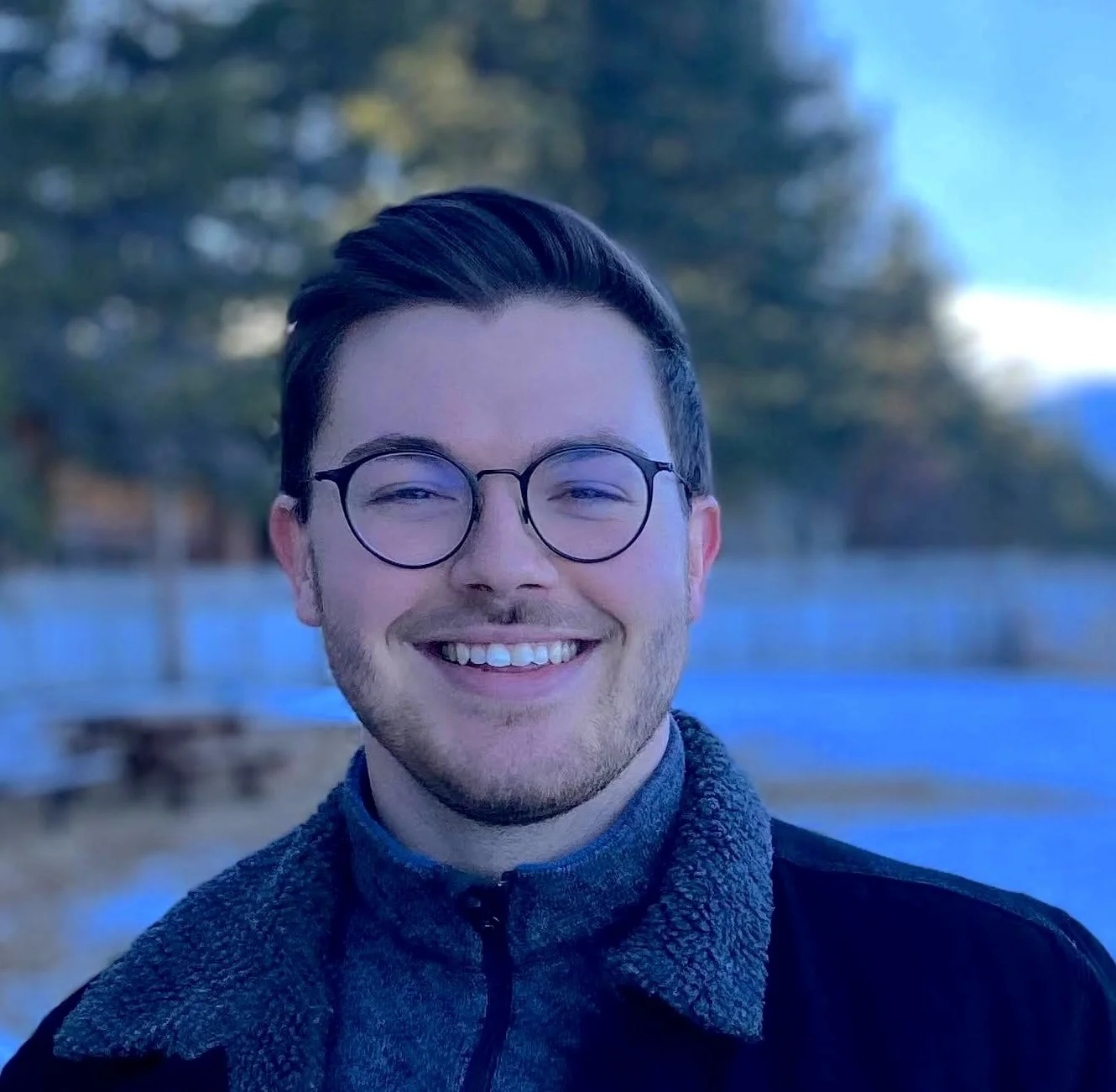
My name is Cal Powers and I currently live in Dallas, Texas. I'm an educator that works in world language education. I've taught English as a second language, French, and Spanish, and I've been working in the education profession for about eight years now. My mother was an educator and so I've always had a passion for education and it's just part of my personality. I really like teaching and learning new things and sharing that with new people.
–––
Okay, let's flash back to the beginning of my pathway. Can you tell us briefly about your childhood? Where did you grow up and a little about the culture you grew up in?
I grew up in a small town outside of Houston, Texas. My mother was a middle school math teacher and a curriculum developer and administrator and my dad was an artist who applied his artistic talents as an architect.
–––
When you were a kid, what did you want to be when you grew up did you ever think you would become a teacher?
When I was a kid, I wanted to be many different things at different points. When I was really young, I saw myself becoming an artist or a chef, something creative. I moved on to wanting to be a musician around middle school. I really loved band and I played the clarinet in band. I fell in love with music and it was one of my favorite classes in the day. I saw myself potentially becoming a band teacher in a school or musician in an orchestra.
–
And then, at the end of 8th grade, I remember being called into the counselor's office with two other classmates of mine, close friends of mine, and we had all signed up to take American Sign Language in our freshman year, but too many people had signed up and the three of us were chosen at random to be asked to either take Spanish or French as an alternative or wait until our sophomore year to take ASL1. That was not according to my plan. I had already planned out my courses I wanted to take in high school and I did not like the idea of abandoning ASL, but I thought, “I've always liked French,” so I decided to take French and that was a fantastic decision because this ended up being one of the best moments of fate in my life.
–
The first week of French class my freshman year, I fell in love with not only language learning, but French specifically. I had a fantastic teacher Madame Locke and I remember specifically after the first week of classes, I had a dream in French using the introductory French vocabulary that we had just learned that week, and I excitedly told Madame Locke as I entered class the next day, and she told me, “You know that's a sign of someone who can easily pick up languages,” and that kind of blew my mind. I didn't know that that was a sign or that it would be something I would find great joy in for many years after that, so it was all kismet.
–––
Looking back on your childhood education, what do you think has changed the most in our education systems since then?
[To hear this response, join the Pre-Pro Club!]
–––
Who was your favorite teacher in grade school and why?
As the child of a teacher, I was definitely a teacher's pet and so I have many many favorite teachers from grade school. Madame Locke in high school was very influential, of course, so was Mrs. Fisher, my freshman year English teacher. She always met us at the door with a firm handshake and direct eye contact and a big smile. Every day, I knew she was going to be out there and it was a fantastic way to start every class with her. She showed every single one of her students that she was there for them and that she saw them and that she was here to participate in their education. She really left a huge positive impact on me in so many different ways.
–––
Think back to any class during grade school: What classroom activity do you remember to this day because it made learning fun?
[To hear this response, join the Pre-Pro Club!]
–––
How do you want the American public school system to change in the future?
[To hear this response, join the Pre-Pro Club!]
–––
Think about someone who's in high school that may be considering entering the education profession: What electives, activities, or extracurriculars would benefit them throughout their careers?
[To hear this response, join the Pre-Pro Club!]
–––
Okay let's move on to the next stage of my pathway: higher education. Can you tell us briefly about your higher education and how that led to a career in education?
So, I graduated high school in 2015 and decided to go to the University of North Texas, UNT, in Denton, Texas. As I said earlier, I like to plan things in advance. I had already looked into UNT when I wanted to be a band teacher and I have family that lives close, so I knew I would not be too far away from home, but just far away enough. I started looking more and more into different career paths you can go into with a degree in a language. For example, translation and interpretation or teaching the language, many of these were enticing to me, but I didn't know yet which path was exactly right for me.
–
So I decided to study French language and literature as my major at UNT. So I graduated from UNT in 2018 and then decided to follow the footsteps of my high school French teacher. In high school, she had explained to me that she had participated in this program while she was in college that allowed her to live in France for a while and teach in a school and get to travel and explore and better her French.
–
I thought that was a perfect opportunity for me both to improve my French to make sure I was good enough at French to teach it, but also to have that little taste of teaching and to see if that was something I could see myself doing full-time. So after my year teaching English in France, I decided to go to graduate school to earn my masters in teaching foreign language. I had a fantastic time teaching in France and it confirmed my suspicions that I'm going to be a teacher.
–
So I applied to a few schools and I was accepted to MIIS, the Middlebury Institute of International Studies in Monterey. It's a small school based in California that has a nice diversity of programs focusing on bettering the world, and one of the best departments, of course, was the TESOL and TFL programs. So I went to MIIS starting in the fall of 2019, right before COVID started and I graduated in 2021 with a Masters in Teaching French as a Foreign Language with a Specialization in Language Program Administration.
–––
What professor positively influenced your career the most during your higher education and what did they do to leave that impact?
A professor who really positively impacted me during my undergrad studies was Dr. Lawrence Williams. He was a professor in the World Language Department. I was in the Honors school and I decided I wanted to do an Honors thesis. It was optional for undergrad Honors students, but I was interested in really making the most of my time in undergrad and trying my hand at conducting research, and I wanted to take advantage of having that time with those professors.
–
I decided to conduct a study looking into mobile apps like Duolingo and Babbel to see if students are using these kinds of apps or are aware of these kinds of apps and what they thought about their use in their language learning path. So, Dr. Lawrence Williams became my faculty advisor for that thesis and that really opened the door for my interest in conducting educational research. I had no clue how fulfilling it would be, nor did I know how much Dr. Williams would impart on me during that time. He really showed me how to conceptualize a research project like this and how to develop it into a good idea that was publishable and would be of value. I really had a fantastic time working with him on that Honors thesis. He was absolutely key to making that a fun and amazing experience for me. That really, I think, influenced my decision to continue to conduct research as a part of my career path.
–––
Think back on any class during your higher education: What classroom activity do you remember to this day because it influenced your understanding of the world?
[To hear this response, join the Pre-Pro Club!]
–––
Thinking back on your higher education, what do you think has changed the most in our higher education systems since then?
Since I was in college I think what has changed the most in our higher education systems has been this noticeable increase in the levels of public doubt about the value of higher education. In my generation alone, we were told as kids that having a college degree was mandatory and that it would set you up for a successful and prosperous life, but then as we reached adulthood, many have seen that a degree is just not as powerful as it once was in the workplace for many professions. And especially with more recent updates like the number of protests on campuses related to the schools that are invested in war enterprises. I think, ultimately, having a higher level of accountability for higher education systems will be a good thing.
–––
How do you want higher education to change in the future?
[To hear this response, join the Pre-Pro Club!]
–––
Think about someone who's about to start their higher education who may be considering becoming a teacher: What advice would you give them to best manage their responsibilities and stress in this early stage of their careers?
So, for those people currently in college who are considering becoming a teacher, I think the best thing they can do to be prepared to manage the responsibilities and stress of a career would be to treat yourself like a school project. At this point in your life you are becoming an adult and you don't have your family and your parents there to support you in everything you do and planning every moment of your day, let alone the coming months in your life.
–
It can become quite overwhelming for those young people in college that all of the sudden have to learn how to manage their day-to-day responsibilities, but also have enough brain space to consider those things that are upcoming in the future that they have to plan for in advance. These are some life skills that I think are pretty crucial to master when you're at this stage in your life and I think looking at yourself like a school project is a way to use skills you already know and have practiced throughout your career in school to better organize your life and reduce the amount of stress of last minute things popping up.
–
So, what I mean by ‘treat your life like a school project’ is create a document on your computer and decide deadlines for when you have to have certain big things done. Write a description of what your project is and what your goal is that you want to come out of it, whatever you have to plan in advance. Some things take a lot of time to plan and a lot of details that you have to figure out, so I think looking at things like a research project that you have to be diligent about really helped to trick my brain into putting things on the calendar, setting an agenda, setting goals for myself and being intentional with not only my day-to-day but also planning my future in a way that sets me up for success, but allows for flexibility of whatever pops up. Okay, let's take a short break. [Music]
–––
Now let's focus on the most critical stage of a teacher's career: the first five years.
So, I consider my first five years of my career to start in 2017 when I was studying abroad in France. I participated in a tandem program where I would meet with other college students there that were native French speakers and I would meet with them to teach them English for an hour and then we would switch and they would teach me French for an hour.
–––
Think back to post graduation: What was one of your first jobs? How did you get it? What were some high points and low points?
One of my first jobs after graduation was working for a company that created online world language curricula for K-12. After graduating, I was unemployed for three months, I think, looking for a job, applying to hundreds of jobs, tracking them on my spreadsheet and doing follow-ups, and doing everything my professors told me to do from grad school and having really a hard time finding a job.–
I was applying to jobs on a Friday afternoon and was about to call it quits for the weekend and I saw one posting for a project manager position for this company and project management was something I found to be so enjoyable. So I ended up being a project manager for an elementary-level Spanish textbook. I got to unleash my creative side and become a project manager for this online book. This was a story-based learning curriculum. I created storyboards for the stories and collaborated with graphic artists to have them illustrated. I developed many activities and assessments. I worked with native speakers to create audio for all the activities and the best part of this job was that I really found myself thriving in getting to play the project manager.
–
Being that checkpoint where I get to talk to everyone on the team and get to collaborate with all of them individually to bring all of their hard work together to create a really awesome final product was really satisfying and really gratifying work. Only having known what it is like to be in the education field as a student and part-time teacher, I wasn't fully aware of all of the different aspects of what it would be like to work for a corporation instead of a school, but also working fully remote, and what that entailed it was a really interesting time to develop those work from home skills.
–––
Look back on the first five years of your career: How has your practice or skill set changed since then?
Looking back on those first five years of my teaching career, I think my practice has changed in that I'm a more well-rounded teacher now. At first, I was more like a friend in the classroom who was just excited to share the knowledge, and now I think my practice has changed now, in that I'm more strategic at switching gears in class, going from sharing the knowledge to assessing my students’ understanding of the knowledge. I feel like I was a more one-dimensional teacher earlier on, though I still had fun in my classroom. I think nowadays I still have fun, but I feel like I'm making more of an impact in my students’ learning by being more intentional with how I go about the teaching I'm doing.
–––
Who is a mentor, leader, or role model that you are thankful to have had as support in those first 5 years of your career and what did they do to support or encourage you?
So, a mentor that I had in my first five years of my career that I am so thankful to have had has to be Dr. Kathi Bailey. She was my program advisor while I was at MIIS. She was also my professor and she was also my specialization adviser for Language Program Administration. I was also working as her graduate research assistant and then, eventually, went on to be co-researchers on the Leadership in World Language Education project that eventually inspired this podcast.
–
I think Kathi was influential for me, not only because she was a phenomenal teacher, but the way she mentored her students ties back into that intentionality of how you go about things in your classroom or in your teaching. The way that she would navigate conversations with me taught me so much about how to be a leader in a way that is not authoritarian. She showed me how to go about being a leader in a way that was inspirational instead of intimidating. For example, if I was experiencing a problem in class with a project or just with interpersonal problems, she would call me into her office at the beginning of my work day and let me explain the situation, and she would let me complain about the situation, and then she would pause and ask, “What do you want me to do? Do you want me to just listen and say nothing? Do you want me to give you advice on what I would do in the situation? Or do you want me to take action? Do you want me to get involved and help solve the problem?” That blew my mind. Not only was she offering to help in the situation, but she was offering what is the best way for me to have help in that moment and that is just one way that she showed me how to be a leader.
–
Kathi has this wonderful talent of being able to put words to a situation or a feeling or a part of my identity that I've always known to be true, but never could put into words myself. For example, working one day on our research project, I was complaining about something and she said, “Cal, I don't know if you know this, but you have a low tolerance for ambiguity.” Ever since that day, I am more aware of when I'm frustrated because something is ambiguous and is unclear to me, and the way that she noticed something in me and put it into words that gave me an ‘aha moment’ and gave me another level of awareness to who I am and how I'm perceived and how I perceive the world––she's done that more times than I can count and I'm just so thankful to have had such an impactful and influential leader to be my role model.
–––
Think about novice teachers in the first five years of their careers: What teacher tip do they have to know?
[To hear this response, join the Pre-Pro Club!]
–––
What is one hard lesson you learned in those first five years that helped you to better manage your professional responsibilities?
So, I think one hard lesson I learned in those early years of teaching that really helped me to better manage my responsibilities as a teacher was learning that just because you put your whole heart into a lesson and think it is perfect most of the time it's not going to go the way you think. That was a really hard lesson for me to learn, that even though I planned, I had hopes of how things would go, and I think it's always the lessons that I cared about the most that didn't go the way I hoped. And I think that was something I really had to learn that––going back to discussing teachers as performers––I think about it as like a stand-up comedian, that sometimes the joke lands in the room and that audience loves it and sometimes it doesn't, you know. You can have a perceived idea of how something will go in advance, but really learning to embrace those unexpected moments that you didn't think would come up, or really embracing those unexpected lessons that come up, where a student or you come across something that is a teachable moment. I think having that ability to improv and make those kinds of slight changes based on how things are going is a skill that a teacher really has to develop.
–––
Think about novice teachers in the first five years of their career: What advice would you give them to manage symptoms of burnout?
[To hear this response, join the Pre-Pro Club!]
–––
Think about novice teachers in the first five years of their careers: What should they keep in mind when they feel like quitting? Why should they push through the tough times?
For those new teachers who are feeling like quitting, I think to be able to push through, I think it's important to change your perspective, not just like, “Oh, consider how lucky you are and how privileged you are,” but––sure that could be part of it as well––but also think about physically change your perspective. Like, if you are really in a tight spot and you're having a panic attack about wanting to quit this job because you're just overwhelmed, physically and literally change your perspective. Go to a new location you've never been to, go do an activity you've never tried, take a pottery class, or do five lessons on Duolingo of a language you've never learned. Literally doing anything new takes your mind completely out of that panic mode. I guess the novelty is a nice distraction.
–
This is also important mentally when you're in that space of wanting to quit, I think changing your perspective by asking yourself questions and zooming out a little bit can help relieve the stress of wanting to quit in the moment. Of course, if you're in a terrible spot, in a really rough context with very little support, I think it's important to take care of yourself and prioritize your mental health, but like I said at the beginning of this episode, I want part of the conversation to be, “What can I do instead of teaching in this moment? Could I maybe be a teacher's aid for a semester?”
–
Considering all the options is something that really could be a great deterrent for people to actually fully quit teaching, especially for those novice teachers. For example, if there was some kind of sabbatical program where maybe after the first few years of teaching, a teacher is considering leaving entirely, maybe they serve as a teacher's aid in the same school the next year or the next semester to maybe reduce the amount of responsibilities they have, but allow them to change their perspective, like I said, and try something new that is still contributing to the education profession in some way, but that just isn't teaching in this moment. That also doesn't mean you have to do it forever, you don't have to quit forever. So, when you really need to push through the tough times, remember to change your perspective.
–––
What is one thing you hope will be different for novice teachers in the future?
[To hear this response, join the Pre-Pro Club!]
–––
Okay, so now that we have a clearer picture of my background, let's focus more on the bulk of my career. Where are you currently working and in what capacities and what projects are you currently working on?
I currently am working for Professionall, of course, but I'm currently working full-time as a teacher at Immerse. Immerse is a virtual reality language learning company and I work at Immerse as an English language guide. They call their teachers “guides” because it's not a traditional classroom. So, I teach in virtual reality. My students are all over the world. I've taught classes with students from literally six out of the seven continents all in the class at the same time. I've taught students from all corners of this Earth.
–
We meet in virtual spaces, like a park or a restaurant or a car dealership, and they're all virtual spaces with interactable objects that the students can pick up and interact with. We teach languages, French, Spanish, and English, right now. We teach those languages in the virtual reality settings that mimic the settings where they would actually be asked to do the tasks that we're doing and the tasks that we're asking them to do. It really helps connect those real life experiences and interactions to the language content that we're teaching in our classes. It's a really interesting space to work in as a teacher who was only really prepared to teach in traditional classroom settings. While I was in grad school, COVID started so we started talking more about what it means to teach via Zoom, but this is even different because you don't even have the visual of the person, right? You are an avatar, your students are avatars. If you're working on the computer, like the teachers only have certain movements like a wave or thumbs up, right?
–
So, if you're trying to explain something that requires movement to explain, you really have to get creative about how you go about doing certain things that, in person, would be easy. Teaching in the virtual world, you really have to think about a lot of different aspects of the class that you didn't have to before. I'll have to do a whole video on that because I've worked at Immerse for over a year and a half now and it's really interesting and as a teacher educator, I think it's really interesting, going forward in the future, I think more teachers can be educators in virtual worlds. So, I think I'm going to have to make a video on what it means to be a virtual reality teacher. Of course, outside of Immerse, I'm still working on a few other projects, like the Leadership in World Language Education project with Kathi and, of course, working on establishing Professionall and this podcast series.
–––
What was your favorite professional experience during your career?
I think one of my favorite professional experiences was building an online elementary Spanish curriculum. That job was one of my first jobs and I think why it was one of my favorites looking back on it––of course, there were some things about that job that were terrible––but I think that job specifically was one of my favorites because it really solidified the idea for me that, as much as I love teaching, teaching in a classroom is not best use of the way I can contribute to the education profession. So, working in the role of a project manager for a textbook like this was really cool for me because I got to combine a lot of my interests and skills, like my creative brain. I really got to break free and have fun and make a video series, and I made a commercial, and I hid Easter eggs in every story, and there were through lines throughout the entire story arcs, and all of the animals in the stories were endemic to the countries we were focusing on.
–
I mean, I could go on and on and on about how much fun I had doing that job, getting to talk to a bunch of people all around the world to pull small bits of information from all of them and getting to combine those all and synthesize them into a final product was so appealing to my artistic side, appealing to my program manager side. So many aspects of that job, of doing the behind the scenes work and getting to innovate and create really engaging educational content, I think was solidifying for part of my professional identity, of what I wanted to do in my day-to-day work.
–––
Look back at your entire career: Can you think of a job you took or something you accomplished that you had no prior intentions of doing that your younger self would be surprised by?
[To hear this response, join the Pre-Pro Club!]
–––
Yes or no, do you consider yourself a leader? If so, what leadership roles have you held or what leadership responsibilities have you taken on? When and how did you become aware of your leadership potential?
[To hear this response, join the Pre-Pro Club!]
–––
What is one teacher skill or practice you think all educators should adopt?
[To hear this response, join the Pre-Pro Club!]
–––
Think about the professional development activities you have participated in during your initial training or that were provided by your employers or that you sought out on your own: What kinds of activities were beneficial and what kinds of activities were not quite as useful?
So professional development activities I've really enjoyed and found beneficial were the ones that were practical. If you can walk away from this training or this conference presentation with one specific tangible thing you can do in your next class period or one specific thing you can do as an educator in your institution. I think it should be the work of the person putting on the professional development to package the information in a way that is almost like a ready-to-eat meal at a grocery store. Like I've mentioned, teachers have so many different responsibilities thrown at them that having to do the mental work of figuring out what about that training can be applied in my classroom is too much to ask already for most teachers that are already overwhelmed with stuff.
–
I think when designing PD, it should be based on things that are practical problems you're experiencing or finding a practical solution, a practical evolution to something you're doing in your classroom or in your school. Seeing a more concrete example of how to implement a strategy or a tool can give more inspiration to teachers. What this looks like in a training is instead of just having a bullet point on your slide say, “Be considerate of students’ differences in cultures,” give a concrete example as to what specifically might we encounter with the students in our school or what subjects might come up, what cultural topics might come up, with that specific classroom subject.
–
Give the concrete practical example of “If a student voices concern regarding this cultural trend, then you could respond with one of three strategies as a type of response,” right? So, giving a concrete example like that, I think makes the professional development a lot easier to implement on the teachers’ end, but also a lot easier to understand how it can make an impact in our practice. So I think really making it a practical approach, making it a plug-and-play I think is a really good way to approach PD. Okay let's take a short break [Music].
–––
This is a segment called “Teach Me Sum’n.” In one or two minutes, can you teach us a concept that is one of your absolute favorites to teach in class?
[To hear this response, join the Pre-Pro Club!]
–––
Can you tell us about a moment in your career where your practice was significantly altered, where you learned a trick that made your job a lot easier?
[To hear this response, join the Pre-Pro Club!]
–––What accomplishment in your career are you proudest of?
[To hear this response, join the Pre-Pro Club!]
–––
What's the funniest moment of your career?
The funniest moment in my career I'm actually going to bite my tongue on because it was actually shared with our first guest Grace Davis who will be in our next episode. So, you'll have to watch our first episode to hear about that moment.
–––
Who is one of your favorite fictional educators and why?
[To hear this response, join the Pre-Pro Club!]
–––
If you could start over and do it all over again knowing what you know now about all of the successes and all of the challenges you faced, would you still choose to be an educator?
So, even though I faced a lot of challenges in my career, I would say that absolutely I would do this all over again. I don't know if I believe in fate. I don't think things are destined to happen, but I think that looking at everything that has happened to you as a learning moment and to look at every moment as an opportunity for growth…I think not only is that an aspect that many teachers have just innately, but I think all of the jobs I've had and all of the things that have accumulated to lead me to be where I am today, I would not mess with time travel to try to make anything better, because I've wanted to be in many other professions throughout my life, but I think being a teacher allows me to get a taste of all of those other professions that I wanted to do. As a teacher I get to be a writer, I get to be a video maker, I get to be so many things that it's never really the same thing twice, and I think that really suits me, and my personality, and what I'm interested in doing in my day-to-day. Absolutely I would do this all over again, without a doubt.
–––
What is one problem or challenge you faced during your career that you want educational leaders to focus on now so that it isn't a problem in the future?
[To hear this response, join the Pre-Pro Club!]
–––
What is a moment in your career that you are thankful to have experienced?
[To hear this response, join the Pre-Pro Club!]
–––
What is one self-care habit you practice to avoid burnout?
[To hear this response, join the Pre-Pro Club!]
–––
What does the future of your career look like? What are your next steps and goals for the future?
So, the future of my career? What's that going to look like? I have a lot more goals of wanting to accomplish things like publishing more, doing more presentations at conferences. Of course, I have many goals for Professionall itself, and I can't wait to take you on that journey. Until I can get to a point where I can commit full-time to working on Professionall and building the Professionall platform, I still plan on continuing to work at Immerse. It's a fantastic company and I love working for them and I'll continue to work toward establishing Professionall as a teacher education company.
–––
Our Mentoring Moment
Okay, so that was the Pathways section of the interview. After the Pathways Battery, there are two final segments for the guest. The first is our Mentoring Moment, the segment where listeners write in to ask for professional advice from our guest. So, this week, of course, it's the inaugural episode, so there are no questions to be asked of me. But, we would love to hear from you, our listeners, so if you have a question you would like to ask our next guest, don't be shy! Send it our way! You can submit your questions by connecting with us on social media or by visiting www.professionall.pro/pathways. Send us a message and who knows? Your question might be in the next episode!
–––
The Pedagogy Pop Quiz
The last segment is called the Pedagogy Pop Quiz, the segment where we put our guests’ educational knowledge to the test. Whether you're a novice or a pro, you've got to know your profession. So, this is a chance for our guests to prove how much they know about the fascinating history of the education profession. If you have an interesting piece of trivia you want included in the next episode, send us a message with a citation from a credible source.
–
The Pedagogy Pop Quiz, of course, is just for fun, to explore the incredibly fascinating history of the education profession. So, this is now the end of the inaugural first episode of the Professionall Pathways Podcast.
–––
Our next episode of the Professionall Pathways Podcast has my friend Grace Davis, an ESL teacher working in Lake Tahoe, California. She's an incredible educator and an incredible friend and I can't wait for you all to meet her.
–
So, please rate, review, and subscribe to our podcast on your favorite podcast platform or YouTube. You can watch the video version of the free episode of this podcast on YouTube, or you can join the Pre-Pro Club to gain early access to an extended ad-free version of the podcast. Visit www.professionall.pro/pathways for more information or to contribute to future episodes. [Music]
–––
This podcast is for informational purposes only and should not be considered legal, medical, or financial advice. The content has no guarantees of accuracy, completeness, or timeliness. The topics discussed are subject to change due to ongoing research and new discoveries. Always consult current sources. Please consult with a professional for specific advice tailored to your situation. The views expressed in this podcast by the host and guests remain their own and do not reflect the views of our sponsors or any people or organizations mentioned. Neither the Pathways Podcast nor Professionall, Public Benefit Corporation are responsible for any losses, damages, or liabilities that may arise from the use of this podcast.